


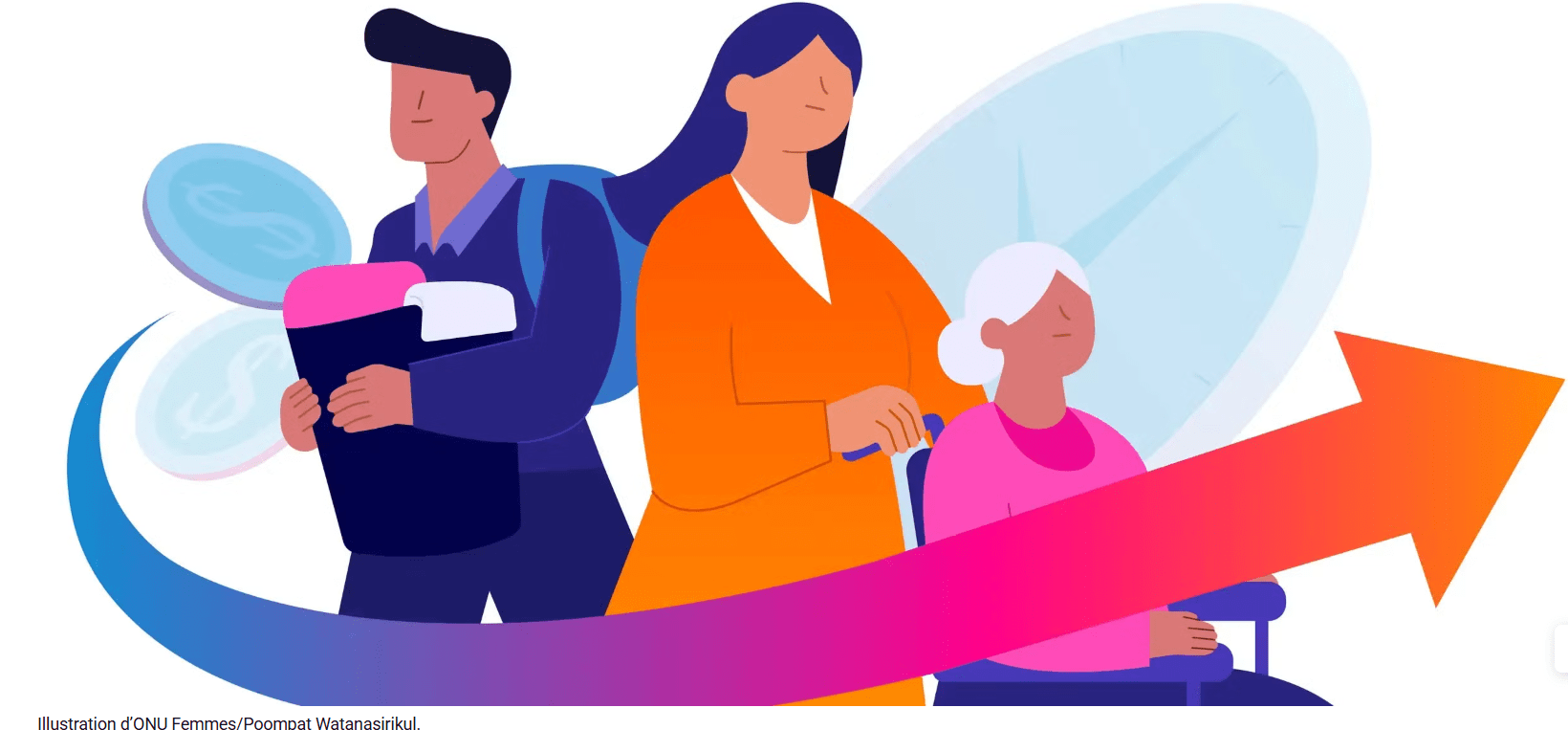
Women and girls do 16 billion hours of unpaid care every day – powering families, communities, and economies. Yet, this work remains largely invisible, undervalued and unequally distributed.
Every day, women around the world do 16 billion hours of unpaid care work. Cleaning, cooking, fetching water, looking after children and the elderly – these are just some of the essential and daily tasks women and girls predominantly take on.
But imagine a world where women and girls stopped working and went on an unpaid work strike. Communities would grind to a halt, and economies would collapse. A global emergency would unfold because this work, which goes unnoticed and unrecognised by governments and business, is so essential that life simply cannot function without it.
Despite its central role in the global economy, unpaid care work is rarely counted in statistics or given the value it deserves. It is invisible in GDP and overlooked by governments, even though women do more than half of the world’s work (52 per cent) – and nearly half that work goes unpaid.
What is unpaid care work and why is it invisible?
Unpaid care work is the daily labour that keeps households, families, and communities running – work that is mostly done by women and girls without pay. It includes raising children, caring for older or sick relatives, and supporting a person with disabilities, as well as cleaning, cooking, washing and collecting water or fuel. It also includes organizing schedules and anticipating household or community needs – often called the “mental load”, unpaid care work is the invisible force that holds households and communities together.
Unpaid care work also extends beyond the home and also includes voluntary community care, such as running community kitchens, neighbourhood childcare groups, and informal support networks.
Caregiving is deeply meaningful. Many women and men describe it as a privilege to nurture their children, support parents, and accompany loved ones through life’s vulnerable moments. Care is what connects us all. It builds trust and belonging and fosters healthy families and strong communities.
While essential to life, much of this daily work is physically and emotionally demanding, and skilled. Yet, it goes unseen and taken for granted. With its true economic and social value hidden and uncounted.
The impact on caregivers is long hours, physical effort, emotional strain, stress, lost earnings, and persistent time poverty that narrows many women’s choices and opportunities. But when we invest in care systems that recognise, reduce and redistribute unpaid care work, reward and represent care workers, and resource care systems with adequate funding, everyone benefits, and families and economies thrive.
What is the hidden economic value of unpaid care work?
Care is the backbone of life. It feeds families, strengthens communities, and powers economies. Without it, everything else would stop.
If women’s unpaid work were given a monetary value, it would exceed 40 per cent of GDP in some countries – that is more than entire sectors like manufacturing or transport. Still this essential labour remains largely invisible in national statistics and budgets. And that invisibility is one of the biggest drivers of poverty and inequality worldwide, with lifelong consequences for women.
When care work is not counted, women’s time, talent, and income shrink. It limits the hours women and girls have for learning, leisure, and rest, while also crowding many into low-paid and precarious jobs.
When care work counts, so do women. When we value care work, we value the people who keep the world running.

Why unpaid care work is still seen as “women’s work”?
Across the world, women still take on most unpaid care work. Social norms still cast care as “women’s work,” while men are seen as breadwinners. In homes, classrooms, and workplaces, those expectations shape choices: who stays at home when a child is sick, who takes the part-time or more flexible job, or who is praised for being a “helpful daughter”.
On average, women undertake 2.5 times more hours every day on unpaid care work than men. Girls learn this early and provide 160 million more hours every day on unpaid care and domestic work than boys.
Where public services and infrastructure are scarce, the gap widens. In rural areas, in households without running water or electricity, and in families without access to affordable childcare, women’s unpaid working hours stretch even longer.
This inequality doesn’t end with unpaid work. Women hold most paid care jobs too – as nannies, domestic workers, live-in carers, nurses and childcare workers – but these jobs are often informal, low-paid, and provide limited protections such as healthcare or paid leave. Around 80 per cent of domestic workers are women, many of them migrants, often excluded from labour laws and vulnerable to abuse and exploitation. Strengthening domestic worker rights is key to protecting the millions of women in this sector.
What are the consequences of inequality in unpaid care work for women?
When women do most of the world’s unpaid care work, it doesn’t just affect them – it affects us all. The cost is measured in time, income, lost opportunity, and potential.
- Time poverty: Women have less time for learning, decent paid work, rest, or civic participation. Globally, 45 per cent of working-age women are not included in the labour market because of unpaid care responsibilities, compared to just 5 per cent of men.
- The motherhood penalty: Motherhood often marks a turning point in a woman’s earnings. In Europe, 60 per cent of the gender pay gap is linked to motherhood: not because women lose ambition, but because they cut back paid hours or leave paid work altogether when childcare is unaffordable and parental leave policies aren’t adequate. In the United Kingdom, one in three mothers with children under five has left paid work unwillingly due to their caregiving responsibilities.
- Lost potential: Every extra hour of unpaid care work shrinks a woman’s chance for paid work by 38 per cent and higher education by 34 per cent.
- Stress and burnout: Long hours of housework and caring for others, with little rest or recognition, leave many women exhausted and stretched to breaking point in what’s often called caregiver burnout.
What do men lose by not sharing care fairly?
When men share care, families get more time together. Across countries, 85 per cent of fathers say they want to be more involved in their children’s lives.
But stigma, workplace cultures, and weak parental leave policies are often stacked against fathers. In many countries, paternity leave is short or unpaid, making it hard for fathers to take time off. Yet the will is there: in north Africa and the Middle East, over 80 per cent of men and women support paid paternity leave, even though only a handful of countries in the region offer it.
By contrast, countries that make leave equal and well-paid show what is possible. In Iceland, each parent gets six months of paid leave and fathers take nearly 90 per cent of theirs. In Denmark and Sweden, leave for fathers has boosted their participation at home and narrowed gaps at work.
In Eastern Europe, UN Women’s Fathers’ schools are helping men build stronger bonds with their children easing pressure on mothers. Men report higher satisfaction and wellbeing, better communication at home, and more equal sharing of chores.
Sharing care between parents supports children’s wellbeing and gives each parent time for work, rest, and for self-care. But until both parents can take time to care without stigma or penalty, women will continue to carry an unequal share, and men will keep missing out one of life’s most meaningful connections.

Why is investing in care smart economics?
Care work is a public good and one of the smartest investments a country can make. When nations put money into care systems, the returns come fast and last for generations:
1. Fuel for economies
Investments in the care economy could create nearly 300 million new jobs by 2035 – almost three times more than the same investment in construction, and with 30 per cent fewer emissions. Every dollar invested in care generates two to three times more jobs than other industries and increases tax revenue, helping to offset the costs.
2. A game-changer for women’s employment
Affordable childcare, parental leave, and quality care services give women time to earn and lead. When care work is shared and supported, women can access and continue in paid work, closing pay gaps and fuelling growth.
3. Healthier, fairer societies
Good care systems raise healthier children, reduce poverty, and create stronger, more resilient communities. Access to quality childcare lets parents, especially women, balance paid work and family life. Quality care services for older people and disability- inclusive services allow everyone to live and age with dignity and autonomy.
What needs to change to make care work visible and valued?
UN Women is calling for a care revolution with six actions:
- Recognize care work – both unpaid and paid – as essential, skilled work that sustains societies, by prioritizing care in laws, policies and budgets.
- Reduce time-intensive tasks (like water access and clean cooking) with better infrastructure and technology.
- Redistribute responsibilities more fairly between women and men, households and the state, families, communities and businesses, through quality and affordable care services – such as childcare and long-term care – and care policies – such as parental carers’ leave, flexible working, and social protection.
- Reward paid care workers with fair pay, protections, and dignity. Too often these are underpaid work roles, despite being essential.
- Represent caregivers’ and care receivers’ needs and rights in policymaking, unions, and decision-making spaces.
- Resource care systems with public financing for care policies, services and infrastructure.
Care is our collective power – our future depends on it
Unpaid care work might be invisible in statistics, but it is everywhere in our lives. It fuels economies, shapes futures, and connects us all. For too long, care work has been dismissed as “women’s work”, when, in truth, it is a shared responsibility and the work that makes all other work possible.
When care is invisible and unequal, it deepens poverty and inequality. When it is valued, supported, and shared, it becomes a force of progress.
UN Women is calling for a care revolution – one that places people and the planet at the heart of a care society and that guarantees the rights and wellbeing of all those who give and receive care.
Source:unwomen.org