


2025 is a crossroads. One road leads to deeper poverty, weaker economies, and human rights stripped away. The other, propels economies forward, building safer societies and fairer futures for everyone.
What makes this year pivotal is the timeline: Just five years remain before the 2030 Agenda for Sustainable Development deadline, which the world set to make equality a reality for all. The Gender Snapshot 2025, produced by UN Women and the UN Department of Economic and Social Affairs, shows both the cost of failure and the gains within reach.
There are reasons to be hopeful. Girls are surpassing boys in school completion, women are gaining seats in parliament, and in just five years nearly 100 countries have scrapped discriminatory laws – from protecting girls from child marriage to establishing consent-based rape laws. But poverty, hunger, war, climate disasters, and backlash against feminism are eroding progress and could obliterate the gains made by a generation.
The data makes the choice we face clear: Equality could still be a reality for girls born today, but the world must invest now.
Poverty has a woman’s face
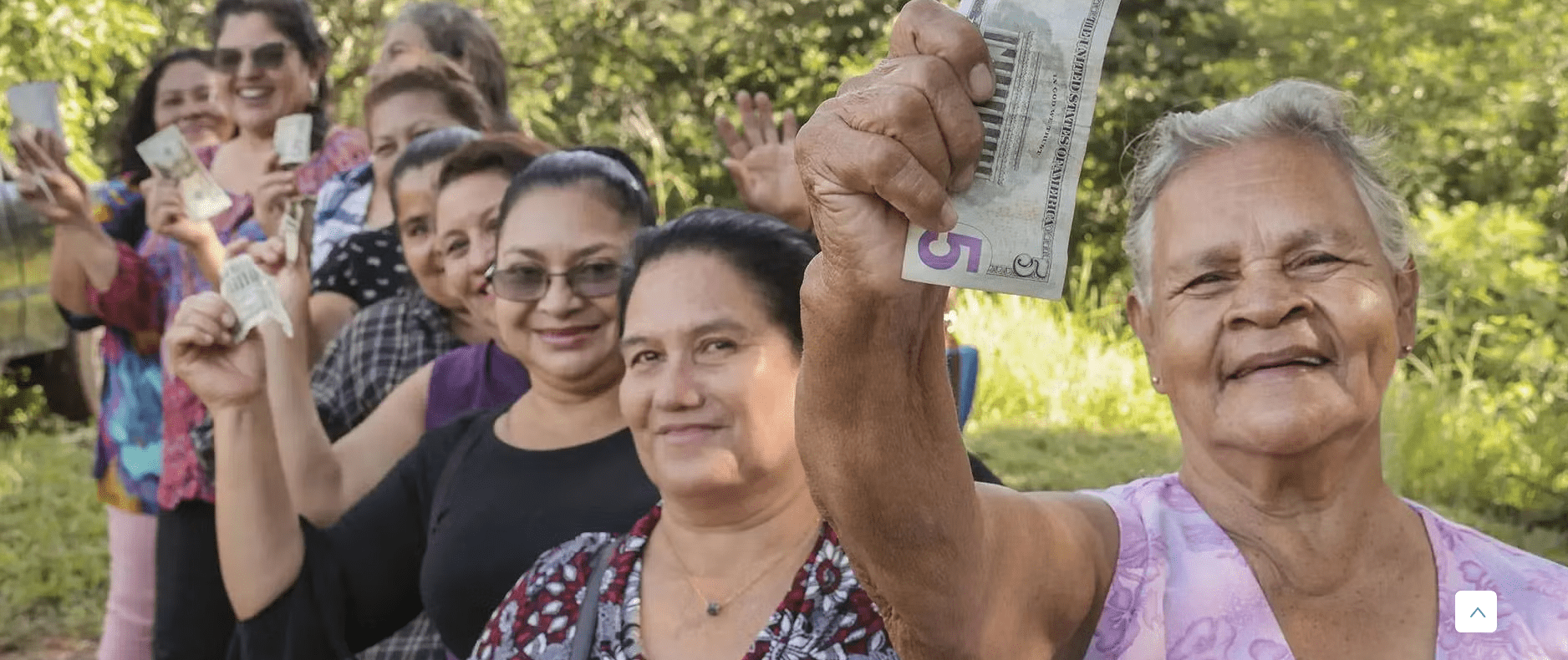
Ten per cent of women live in extreme poverty, a number that has not improved since 2020, and 351 million women and girls could still be trapped in extreme poverty by 2030. Women are taking on more unpaid care work than men, they are locked out of land ownership, finance, and decent jobs – denied the necessary tools to prosper.
If governments act now, women’s extreme poverty could fall from 9.2 per cent in 2025 to just 2.7 per cent by 2050. And the payoff? A $342 trillion boost to the global economy by 2050. Investing in women is the smartest growth strategy a country can choose.
Hungry, tired, and overlooked
In 2024, women were more likely than men to go hungry with 26.1 per cent of women facing food insecurity compared to 24.2 per cent of men – that is 64 million more women than men. Women also spend nearly three more years of their lives in poor health. By 2030, one in three women of reproductive ages could be living with anaemia, a condition that saps energy, productivity, and health.
Hunger and poor health keep women away from school, work, and leadership, and the costs of this exclusion rip through entire families and economies. Children born to malnourished mothers, for example, face higher risks of poor health and lower lifetime earnings.
A society is only as strong as the health of its women. When women get the food and healthcare they need, families thrive and poverty cycles end.
School doors open, but child marriage and violence cut futures short
Girls are now more likely than boys to finish school, but the path to leadership is broken. In 65 of 70 countries, women are far more likely to be secondary school teachers than principles, showing just how few make it to the top, even in a female dominated sector.
For too many girls, education ends abruptly with nearly one in five young women married before turning 18. Violence is also a daily horror, with 1 in 8 women aged 15–49 suffering from partner violence in the last year alone. Yet where strong laws, services, and systems exist, rates are 2.5 times lower – proof that protection works.
Harmful practices continue to strip girls of their dignity and bodily autonomy. Each year, 4 million girls undergo female genital mutilation (FGM), half before their fifth birthday. At the current pace, progress needs to be 27 times faster to end FGM by 2030.
Education can open doors but child marriage, FGM, violence and discrimination slam them shut, leaving the glass ceiling intact and women side-lined from leadership.
Power, pay checks, and the AI divide
Women hold just 27 per cent of parliamentary seats and 30 per cent of management roles. At this pace, equality in leadership is nearly a century away. Quotas show what is possible – in some countries they have doubled women’s share of parliamentary seats – but progress remains painfully slow.
Hurdles start long before women reach the boardroom. Some 708 million women are excluded from the labour market by unpaid care and time poverty. Even when women do work, they are crowded into lower paid jobs with fewer chances to rise. Yet, when women do reach positions of power, the payoff is clear: companies with more women in leadership consistently outperform their peers – proving that when women have equal access to opportunity, growth and innovation flourish.
As the Artificial Intelligence (AI) revolution takes hold, the world faces a new disruption, and inequality risks being coded into the future if we do not learn from past mistakes. Women make up only about 29 per cent of the global tech workforce and just 14 per cent of tech leaders. And nearly 28 per cent of women’s jobs are at risk from AI, compared to 21 per cent of men’s.
But the digital future could also be a great equalizer. Closing the gender digital divide could benefit 343 million women and girls, lift 30 million out of extreme poverty, improve food security for 42 million, and spark $1.5 trillion in global growth by 2030.
Women pay the highest price in conflict and climate chaos
In 2024, 676 million women and girls lived within 50 kilometres of deadly conflict, the highest number in decades. At the same time, climate change related stressors, such as floods, droughts, and deadly heat are intensifying, and women are the first to feel the impact.
This means walking further for water, haemorrhaging income when farms and fisheries collapse, or living in peril in unsafe shelters. Climate change alone could push another 158 million women into poverty by 2050, nearly half in sub-Saharan Africa. And yet women are still shunned from peace negotiations and climate disaster planning.
Solutions can be simple. An estimated $8 billion a year for clean cooking fuels could deliver $192.3 billion in health and time savings for women and girls, alongside major cuts in carbon emissions — a 24-fold return. Without investment, the costs of inaction could reach $800 billion.
No data, no progress
You can’t fix what you can’t see. Yet governments are systematically defunding one of the most important tools for progress: data.
Since 2025, more than half of national statistical offices reported budget cuts, including to life-saving surveys on health and demographics. Only 57 per cent of the gender data needed to track progress is available, just 1 in 4 countries know how much they spend on gender equality, and only half of national gender institutions are adequately staffed.
Without solid data, governments will be unable to lead the race for equality. Protecting data means protecting progress. It is one of the simplest, most cost-effective steps we can take – because if women’s needs and successes are not counted, they are written out of the future.
Five years to cash in on equality
The world has five years left to decide whether equality will remain a hollow promise or become a reality for everyone.
The stakes could not be higher. Keeping women in poverty, side-lined from leadership, and exposed to violence is economic sabotage. Inequality drains growth, wastes potential, and holds entire societies back.
Action can turn deprivation into growth. Investing in women could lift hundreds of millions out of extreme poverty and add $4 trillion to the global economy by 2030 and $342 trillion cumulatively by 2050. Equality is not a cost to bear – it is the profit the world forfeits every day it delays it.
But money alone is not enough. This is about exclusion. Women and girls are pushed out of labour markets, denied healthcare, erased from budgets, and silenced from decision-making. Systems don’t suddenly crash, they are hollowed out, piece by piece.
The path forward is no mystery. The Gender Snapshot 2025 points to six game-changing areas: digital inclusion, freedom from poverty, safety from violence, equal decision-making, peace and security, and climate justice. Together these form the Beijing+30 roadmap: concrete solutions that can speed up progress, improve lives everywhere, and rewire economies for equality.
The future will only be fair and prosperous if leaders choose gender equality now.
Source:unwomen.org